

There's a few different ways that gluten intolerance can cause you to gain weight. Here's some of the triggers to watch out for and how to side-step unwanted weight gain from gluten intolerance!

❓What's the deal with gluten intolerance and weight gain?
When it comes to gluten intolerance and gaining weight, there's a connection for sure.
First, let's take a closer look at what the heck gluten intolerance is and what are the symptoms of gluten intolerance.
Then, let's go over some of the most common questions around gluten intolerance and weight management.
Time to dive in!
Jump to:
- ❓What's the deal with gluten intolerance and weight gain?
- 🙋♀️Understanding Gluten Intolerance
- Get my PDF Checklist of Foods to Cut Out STAT
- Find Out How Long After Eating Gluten Do You Feel Sick!
- 🤯Symptoms of Gluten Intolerance
- 🙋♀️How Gluten Intolerance Can Potentially Cause Weight Gain
- 🔄Indirect Ways Gluten Intolerance May Cause Weight Gain
- ✅Managing Gluten Intolerance and Supporting a Healthy Weight
- Here's 7 Mistakes You're Probably Making!
- High Protein Cottage Cheese Smoothie Bowl
- Grab my Gluten-Free Meal Plan for Beginners (PDF)!
- 👩⚕️When to See a Healthcare Professional
- ✅Bottom Line
- 💬 Comments
🙋♀️Understanding Gluten Intolerance
First up, what is Gluten Intolerance, anyways?
Gluten intolerance, also known as gluten sensitivity or non-celiac gluten sensitivity is one of 3 main gluten-related disorders.
The 3 main gluten-related disorders are:
- Gluten intolerance
- Celiac Disease and,
- Wheat Allergy
Although there are differences between all 3 disorders in terms of how common they are, involvement of the immune system and symptoms, they all have one thing in common:
All gluten-related disorders involve a negative reaction somewhere in the body from gluten.
Got gluten bloat? Get rid of it!
Get my PDF Checklist of Foods to Cut Out STAT
This "negative reaction" can be anything from brain fog, to eczema, to depression to stomach bloating from gluten.
More on symptoms below.
What is Gluten? And which foods have gluten?
Gluten is the protein component of certain grains.
The most common sources of gluten from grains is found in grains like wheat, barley and rye.
Specifically in wheat, gluten makes up ~80% of the total proteins.
Difference between gluten intolerance, wheat allergy, and celiac disease
Gluten intolerance or non-celiac gluten sensitivity are similar to celiac disease and wheat allergy as they are make up the 3 gluten-related disorders.
But there are a few important differences between these reactions to gluten.
- Non-Celiac Gluten Sensitivity (NCGS) - this term describes a condition where people have symptoms like bloating, nausea, stomach pain, brain fog and join pain. But these same people don't have celiac disease.
- Celiac Disease - is a condition that involves an immune-mediated response to gluten (the protein found in wheat, barely and rye.) If you need to go gluten-free for celiac disease, go here
- Wheat Allergy - is an immune reaction to foods containing wheat
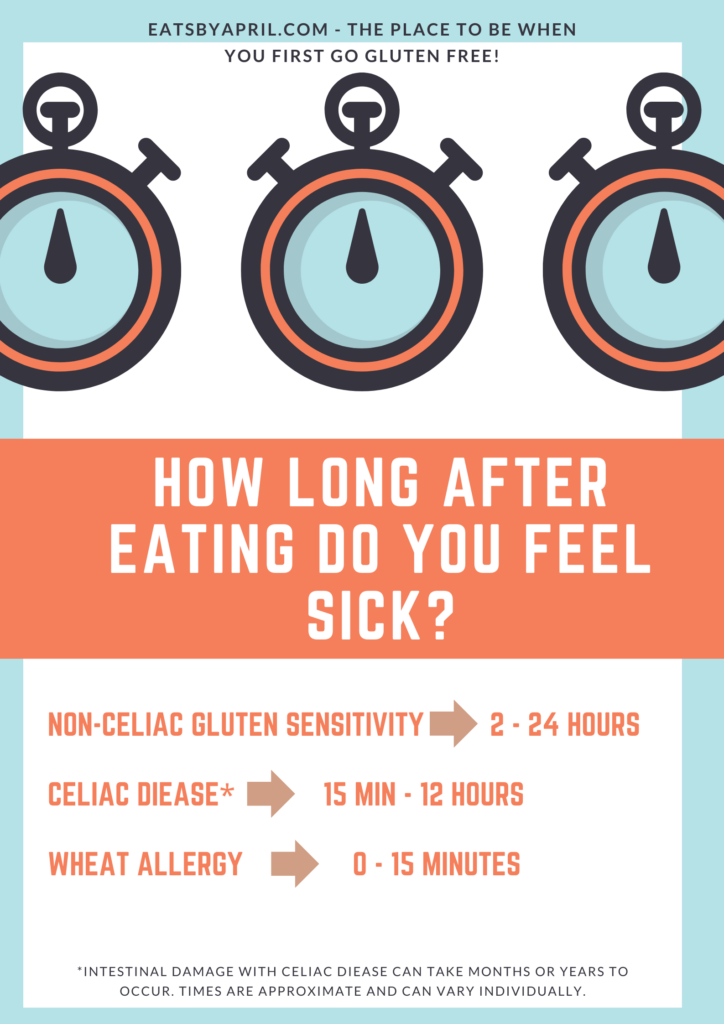
Was it something you ate?
Find Out How Long After Eating Gluten Do You Feel Sick!
🤯Symptoms of Gluten Intolerance
Generally speaking, there are 2 types of symptoms when it comes to gluten intolerance: Digestive Symptoms (those that involve the digestive system) and Non-Digestive Symptoms (those symptoms that affect other systems in the body).
Digestive Symptoms of Gluten Intolerance Can Include:
- Abdominal pain
- Bloating - sometimes called "gluten bloat"
- Constipation
- Diarrhea and sometimes frequent diarrhea
- Gas
- GERD (Gastric Esophageal Reflux Disease) or reflux
- Indigestion (also called "dyspepsia")
- Stomach pain
- Nausea
(link to this article https://eatsbyapril.com/gluten-intolerance-vs-celiac-disease/)
Non-Digestive Symptoms of Gluten Intolerance Can Include:
- Anxiety
- Ataxia
- Depression
- Extra-intestinal manifestations such as canker sores and chronic skin conditions like, dermatitis herpetiformis
- Fatigue
- Inability to concentrate on work
- Inability to memorize various things
- Join pain
- Mood Changes
- Non-specific symptoms including "brain fog"
- Regular headaches
Prevalence of Gluten Intolerance
Gluten intolerance is more common than you might think: it has a prevalence of about 0.5% - 13% worldwide and is more common in women (Asri, et al, 2021).
The prevalence of gluten intolerance is rising too:
🙋♀️How Gluten Intolerance Can Potentially Cause Weight Gain
While gluten intolerance can be related to weight loss due to malabsorption of nutrients, you could experience weight gain.
Here's a few reasons why this might be happening:
Impact on Digestion and Absorption
Gluten intolerance can lead to inflammation and damage in the small intestine, impairing nutrient absorption.
This damage can disrupt the balance of gut bacteria, leading to dysbiosis, which has been linked to weight gain and obesity.
Additionally, the body's attempt to repair intestinal damage may increase energy expenditure, potentially leading to increased appetite and caloric intake.
Possible Impact on Metabolic Function
Chronic inflammation resulting from gluten intolerance may interfere with normal metabolic processes.
For example, inflammation can affect insulin signaling, or the way insulin is suppose to work in the body.
This can lead to insulin resistance—a condition associated with weight gain and increased fat storage.
There are some studies that show a gluten-free diet can reduce adiposity, inflammation, and insulin resistance, suggesting that gluten may play a role in metabolic dysfunction.
Digestive Discomfort and Bloating
Many of us with gluten intolerance get bloated have gas and abdominal pain after consuming gluten.
When you're bloated and just feeling generally horrible, it often means we'll reach for easily digestible, high-calorie foods.
And this can also add to weight gain over time.
Hormonal Imbalance
Chronic inflammation from gluten intolerance can act as a physical stressor, elevating cortisol levels—the body's primary stress hormone.
Elevated cortisol can disrupt digestion, immune function, and metabolism, leading to increased appetite and fat storage, particularly in the abdominal area.
This hormonal imbalance can contribute to weight gain over time, again.
🔄Indirect Ways Gluten Intolerance May Cause Weight Gain
Compensatory Eating and Cravings
Interestingly, undiagnosed gluten intolerance can lead to cravings for certain types of foods, especially for high-sugar and high-carb foods.
Even for me, when I had such bad nausea and painful burping I could hardly stand, I craved things that were high fat and salty like chips or french fries.
I couldn't get enough!
So that might happen to you as well. That and the fact that some of us, myself included, turn to more "comfort foods" when we're not feeling 100%.
You might not feel like eating super healthfully when you're doubled over in pain (understandably!)
Reduced Physical Activity
Being gluten intolerant can cause a lot of symptoms that don't always affect the digestive system.
Things like feeling really tired all the time, having joint pain and painful bloating can happen too. And these symptoms can not only reduce your motivation to exercise, they can make it hard to actually move.
So you might want to exercise or at least get the dog out for a good walk but your legs may be aching.
Or if you're like I was, the bloating is so painful and uncomfortable you can only really just lay on your bed, doubled over in pain.
And you're left wishing you could get out and walk with the kids to the park.
Weight Gain Due to a High-Calorie Gluten-Free Diet
There's a lot more to weight gain than calories in / calories out. And too many neuro-hormonal controlling processes at work in our bodies.
However, with that said, eating a diet that's nutrient-dense and gluten-free can be hard sometimes, especially when you're just getting started with gluten-free eating.
Many processed foods that are gluten-free are also high in added sugars, saturated fats and sodium (salt).
So going gluten-free might help your digestive or stomach issues. But if you're going for more processed gluten-free foods (and not just naturally gluten-free alternatives), you could end up packing on more weight from these high-calorie, low-nutrient gluten-free alternatives.
✅Managing Gluten Intolerance and Supporting a Healthy Weight
If you've had really bad gluten stomach pain and bloating for a while, you need relief. Preferably, yesterday.
But you also don't want to gain weight while you finally get relief from stomach bloating and pain.
Here's some tips to get started with gluten-free eating while being mindful of your weight.

Switching to Whole Foods
There's so many naturally gluten-free foods out there.
You don't need to eat packaged or overly processed foods to easily go gluten free.
Focus on real, nutrient-dense foods while skipping the processed stuff.
Here’s how to build a balanced, gluten-free and protein-packed plate:
High-Protein Gluten-Free Foods
Load up on these powerhouse proteins:
- Lean meats – Chicken, turkey, grass-fed beef
- Fatty fish – Salmon, tuna, sardines (bonus: packed with omega-3s!)
- Eggs – Super versatile and loaded with protein & vitamins
- Legumes – Lentils, chickpeas, and black beans (build up tolerance slowly if new to you)
- Nuts & seeds – Almonds, walnuts, chia seeds, and hemp seeds
- Gluten-free grains – Rice, quinoa, buckwheat, and amaranth
- Dairy & dairy alternatives – Greek yogurt, cottage cheese, and unsweetened almond or coconut milk
- Tofu & tempeh – Great for plant-based eaters looking for protein + fiber
Veggies & Healthy Fats – The Perfect Sidekicks
Don’t forget to balance out your meals with fiber, vitamins, and healthy fats:
- Leafy greens – Spinach, kale, arugula (nutrient powerhouses!)
- Cruciferous veggies – Broccoli, Brussels sprouts, cauliflower
- Root veggies – Sweet potatoes, carrots, beets (great for energy)
- Healthy fats – Avocado, olive oil, nuts, and seeds for hormone balance & brain fuel
Easy Gluten-Free Swaps
Ditch the gluten without missing out on taste:
- Swap pasta – Go for chickpea or lentil pasta instead of wheat-based versions
- Replace bread – Try lettuce wraps, corn flour tortillas or gluten-free bread
- Power up your smoothies – Use gluten-free protein powder, Greek yogurt, or nut butter for a protein boost

High Protein Cottage Cheese Smoothie Bowl
Only 5 ingredients and naturally gluten-free🥣
Improving Gut Health
When you're dealing with gluten bloat, it's really important to take a look at your gut health.
Here's some tips to get started:
Focus on the Fibre - take a close look at what you're eating.
Notice where can you add more fibre and reduce plain ol' non-fueling carbs.
Here's some options for high fibre and gluten free foods to include in your diet:
Whole Grains & Seeds
✅ Quinoa – 5g fiber per cup cooked
✅ Brown rice – 3.5g fiber per cup cooked
✅ Buckwheat – 4.5g fiber per cup cooked
✅ Chia seeds – 10g fiber per 2 tablespoon (soak them for pudding or toss in smoothies!)
✅ Flaxseeds – 3g fiber per tablespoon (great in smoothies or baked goods)
✅ Psyllium husk – A fiber powerhouse for baking or thickening
Legumes & Beans
✅ Lentils – 15g fiber per cup cooked
✅ Chickpeas – 12.5g fiber per cup cooked (hello, hummus!)
✅ Black beans – 15g fiber per cup cooked (add to soups, salads, or make brownies!)
Fruits & Veggies
✅ Berries – Raspberries & blackberries pack 8g fiber per cup
✅ Avocado – 10g fiber per fruit (spread it, mash it, love it)
✅ Sweet potatoes – 4g fiber per medium potato (leave the skin on for extra fiber!)
✅ Leafy greens – Kale, spinach, and Swiss chard = fiber gold
✅ Carrots & cucumbers – Snackable fiber sources
Nuts & Alternative Flours
✅ Almond flour – More fiber than white GF flours
✅ Coconut flour – Super high in fiber (use sparingly, it soaks up liquid!)
✅ Oats (certified GF) – 4g fiber per ½ cup
Pro Tips Boosting Fibre Intake
🔹 Add chia or flax to smoothies, oatmeal, or yogurt
🔹 Use lentils in soups, salads, or even mashed into burger patties
🔹 Swap white rice for quinoa or brown rice
🔹 Make your own trail mix with nuts, seeds, and dried fruit
🔹 Eat the skin! Apples, pears, potatoes—more fiber that way
Try a probiotic supplement on for size
Probiotics are like tiny superheroes for your gut! 🦸♂️
They’re live bacteria and yeasts that help keep your digestive system happy and balanced.
Here’s how they work their magic:
1️⃣ Restore Gut Balance
Your gut has trillions of bacteria—some good, some bad. Stress, poor diet, antibiotics, or illness can throw this balance off. Probiotics put back the good bacteria, keeping the bad ones in check.
2️⃣ Improve Digestion & Nutrient Absorption
They help break down food, making it easier for your body to absorb nutrients, vitamins and minerals. Some strains even help digest fiber, reducing bloating and discomfort.
3️⃣ Strengthen the Gut Barrier
Probiotics reinforce the gut lining, preventing harmful bacteria and toxins from leaking into your bloodstream (aka "leaky gut"). A strong gut = better overall health!
4️⃣ Reduce Bloating & Gas
By promoting the right balance of bacteria, probiotics help reduce bloating, gas, and constipation—especially if you're eating a fiber-rich, gluten-free diet.
5️⃣ Boost Immune Function
Did you know that 70% of your immune system is in your gut? Probiotics help produce natural antibodies and train your immune cells to respond better to infections.
6️⃣ Support Mental Health
Your gut and brain are connected (the gut-brain axis), and probiotics may help with mood, anxiety, and even brain function by producing feel-good neurotransmitters like serotonin.
Best Gluten-Free Probiotic Sources
✅ Fermented foods – Sauerkraut, kimchi, pickles (make sure they’re naturally fermented!)
✅ Yogurt (dairy or dairy-free) – Look for “live & active cultures” on the label
✅ Kefir – A tangy, probiotic-rich drink (available in dairy-free versions)
✅ Miso – Great for soups or dressings
✅ Tempeh – A fermented soybean protein source
✅ Kombucha – A fizzy, probiotic-rich tea
💡 Pro Tip: If you’re taking probiotic supplements, make sure they’re gluten-free and contain a variety of strains like Lactobacillus and Bifidobacterium for maximum benefits.
Move as much as you can
We all know that exercise and movement is good for us.
And I've heard it so many times from physicians and health professionals: if the benefits of exercise could be put into a pill, EVERYONE would be on it.
I'm not gonna get into the dozens of reasons WHY exercise is great for you - I have a feeling you already know.
But just another plug and encouragement from me: move as much as you can and do it every day.
You don't have to get sweaty in a dingy gym. You don't have to feel like puking on a bike that doesn't go anywhere.
All you gotta do it move.
And get that neighbour friend to go with you too. Walking is more fun when you're chatting as you go😄
Increase your water intake
I really suck a drinking enough water. BUT: I try.
And if you don't already get 1-2 liters of water in per day, start increasing it.
Especially since you'll be increasing your fibre intake: your body will thank you💩
Grab my Gluten-Free Meal Plan for Beginners (PDF)!
Go gluten-free starting today!
👩⚕️When to See a Healthcare Professional
Seeking Professional Help for a Diagnosis
With many issues of the gut, there are no easy biomarkers or straight-forward blood tests you can do to find out if gluten is a problem for you or not.
As always, talk to your doctor or trusted healthcare professional for any medical issue.
There are tests your healthcare professional can order to help figure out if gluten (or something else) is causing your problems.
At the time of writing this, there's one way to test for gluten intolerance from the research. It's called an "elimination diet".
- Essentially, you basically cut out gluten for some time and then notice any symptoms after you start eating gluten again
You can do an elimination diet on your own, it's possible.
But if you want a step-by-step plan to follow with recipes and coaching along the way, check out my 14-Day Full Body Reset Program.
14 Day Full Body Reset Program
This powerful, proven program takes the guesswork out of complicated food elimination diets with an easy to follow, whole food meal plan.
You don't have to wait any longer to get relief: you can start now.
✅Bottom Line
So to sum it up: gluten intolerance can cause weight gain.
Especially if you have undiagnosed gluten intolerance and are just trying to get through the day with eating more (or less healthy) food to manage nausea.
And you're not able to exercise or even move in the way that feels good to you.
Trying to manage your weight while dealing with symptoms like painful bloating, burping, nausea and stomach pain is such a hard battle.
And it's one you do NOT have to fight - like I did - alone.
Talk to your healthcare professional about your digestive symptoms and see what advice they have for you.
Or if you want to get started right away, start by cutting out the gluten in your diet with my this list of foods to cut out:
And be sure to join in for weekly recipes, tips and tricks to go gluten-free:
I'll see you on the inside!
~April


Comments
No Comments