

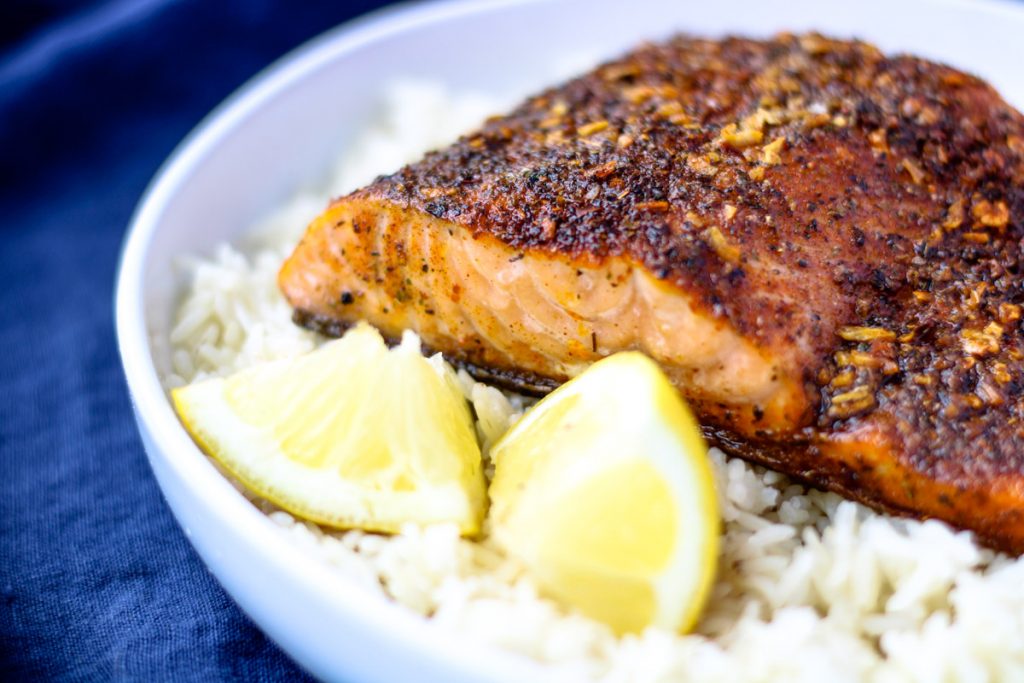
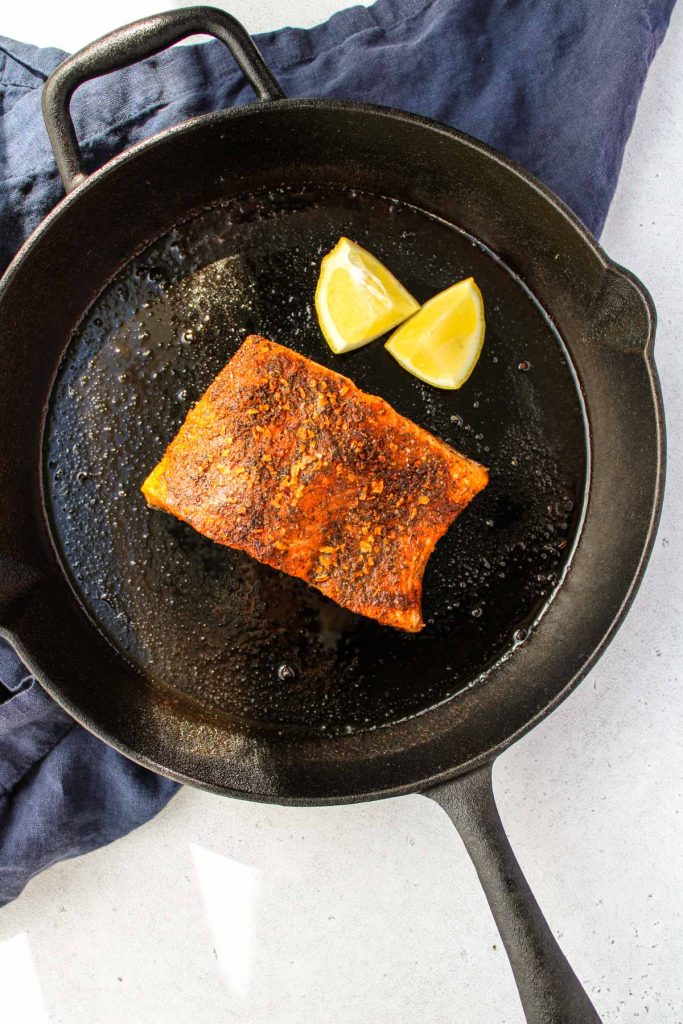
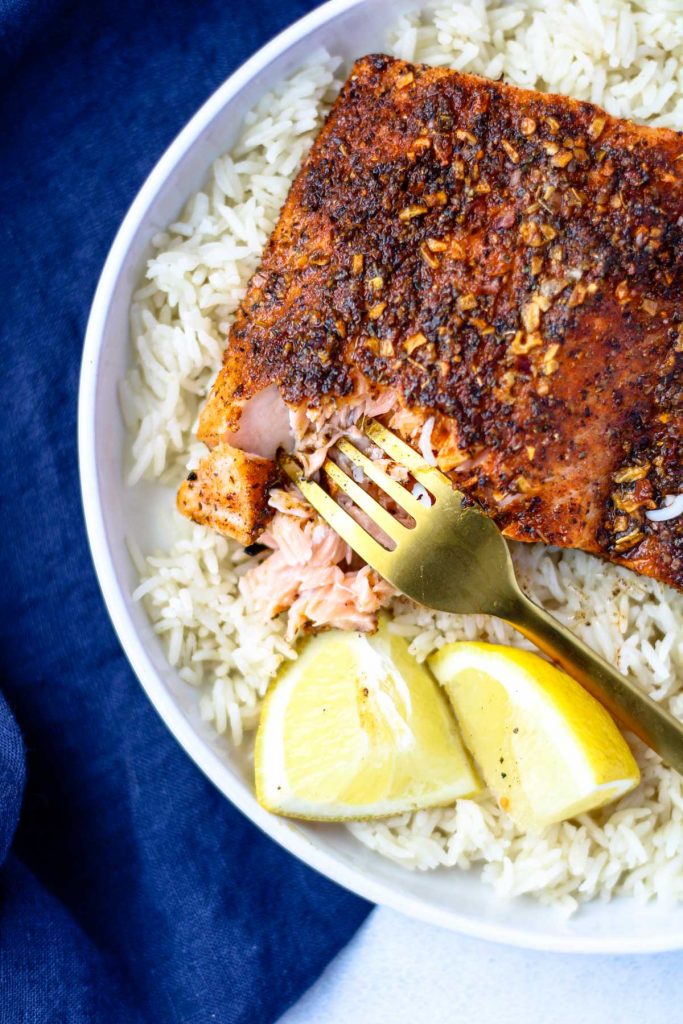
This salmon cooked in a cast iron skillet makes a healthy and gluten-free weeknight supper so simple! A delicious cajun-spice coated salmon fillet gets a sear in the cast iron pan and then finished in the oven. Served on rice and with a lemon wedge, this is a near perfect meal.
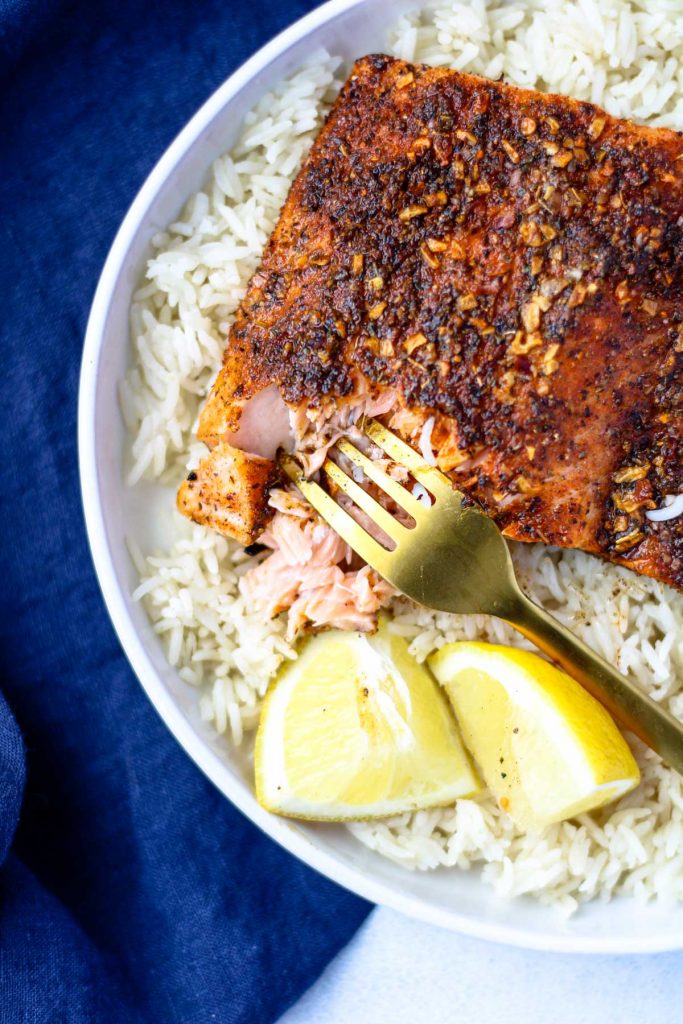
Cooking salmon has never been easier!
This fool-proof recipe for cooking salmon in a cast iron skillet turns out perfectly every dang time.
Inspired by my recipe for Cast Iron Skillet Chicken Breast, this salmon recipe uses the skillet in the same way: searing first then finishing in the oven.
Be sure to make some fluffy basmati rice in the Instant Pot to go with the salmon or get your greens in with this Easy Butter Lettuce and Pomegranate Salad.
Jump to:
📝Ingredients
Here's what you'll need to make this salmon recipe:
- Salmon fillets with the skin on (if you don't have salmon with the skin on, consider making this Easy Baked Salmon with Mayo or Easy Baked Salmon with Mango Salsa)
- Butter
- Cajun seasoning - I like this gluten-free one from Clubhouse
- Lemons for serving
See recipe card for quantities and detailed instructions.
🔪Instructions
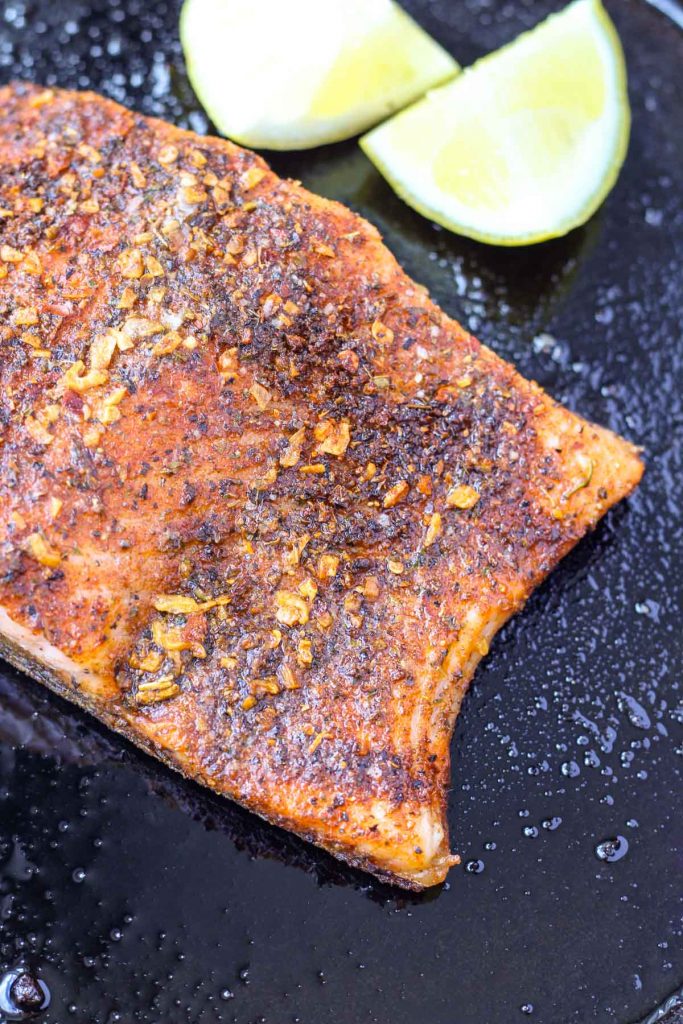
Here's what you'll do to make the salmon in a cast iron skillet:
- Pre-heat oven to 400 degrees F.
- Heat a cast iron pan over medium-high heat and melt 1 tablespoon of butter in the pan.
- Pat the fillets dry and coat the top in the cajun seasoning.
- Once the butter is melted and starts to bubble, add the salmon fillets, skin side down to the pan.
- Let the salmon cook for 3 minutes and don't flip it! As it cooks, spoon some of the melted butter overtop.
- After 3 minutes, place the whole pan into the oven to finish cooking the salmon.
- Depending on the size of the fillets, it will take another 10-13 minutes to cook in the oven.
Hint: if you're going for that crispy salmon skin, getting it as dry as possible first will help. Pat the fillets down with paper towel to remove excess moisture.
Don't forget to dry the skin side too!
You can also place in the fridge on a paper towel lined plate for a few minutes before cooking. This also helps to remove moisture.
Another way you can get the salmon skin super crispy is to sprinkle the skin-side only with a light dusting of some gluten-free flour before cooking in the cast iron pan.
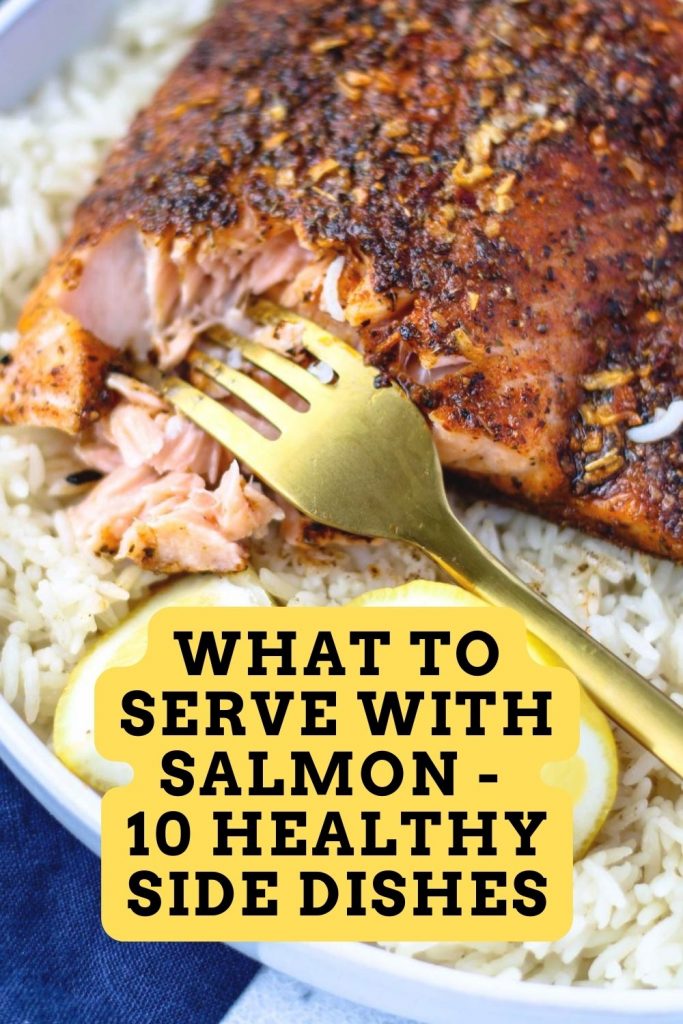
What to serve with salmon🐟
Keep the nutritious-vibes goin' with 10 side dish options perfect for pairing with salmon
💃Variations
Being a spicy salmon recipe, the cajun seasoning is there to really bring the heat🔥
If you're not a fan of the spice, check out these other options for flavouring the salmon:
- Mayonnaise - I know. It sounds kinda strange but trust me on this one. Mayo on salmon works! Just smear some mayo on top of the salmon before you sear it in the cast iron pan. The mayo will help keep it moist while it finishes cooking in the oven. Or check out Easy Baked Salmon with Mayo for more details and tips
- Maple syrup - if you love salmon like I do, then you've probably had this tried-and-true pairing of maple flavour and salmon. It's popular for a reason: it's delicious! Marinade the salmon fillets for 30 minutes in a combo of maple syrup, a little gluten-free soy sauce, crushed garlic, onion powder and fresh ground pepper. Bake in a 400 degree F pre-heated oven for 15 minutes or until done
- Lemon and dijon mustard - another classic, this combo of lemon and mustard, with a clove of crushed garlic and some salt, pairs perfectly with salmon. Just coat the top of the salmon with the lemon+dijon before searing
- Keepin' it Simple - if you're looking to keep it simple, sprinkle some Kosher salt over the fish and top with slices of lemon before searing. You can't go wrong just letting the delicious salmon flavour shine through😄
🥣Equipment
Of course, we're cooking in cast iron for this recipe but maybe you haven't taken the jump into cast iron yet?
No problem-o😄
Any pan that will go from the stovetop into the oven will work.
Check the bottom of your pan or the manufacture's website if you're not sure.
❓Is cast iron good for salmon?
Cooking salmon in a cast iron skillet is an easy and effective way to cook this delicious fish.
Just make sure the cut of salmon you're cooking has the skin still on it. This will make it easier to sear it in the cast iron pan. The skin holds the salmon together while it gets a nice sear from the hot skillet.
The salmon skin can also get nice and crispy when you cook it in a cast iron skillet.
But if you're wondering if salmon is better in the oven or skillet, both are great ways to cook salmon - just with different benefits.
If you like crispier salmon skin, then go for the cast iron skillet method.
Baking in the oven totally works too though. If you bake the salmon in the oven, you can eat the skin as it is or if you don't like the texture of non-crispy salmon skin, just skip it.
🥡Make it a Meal Prep
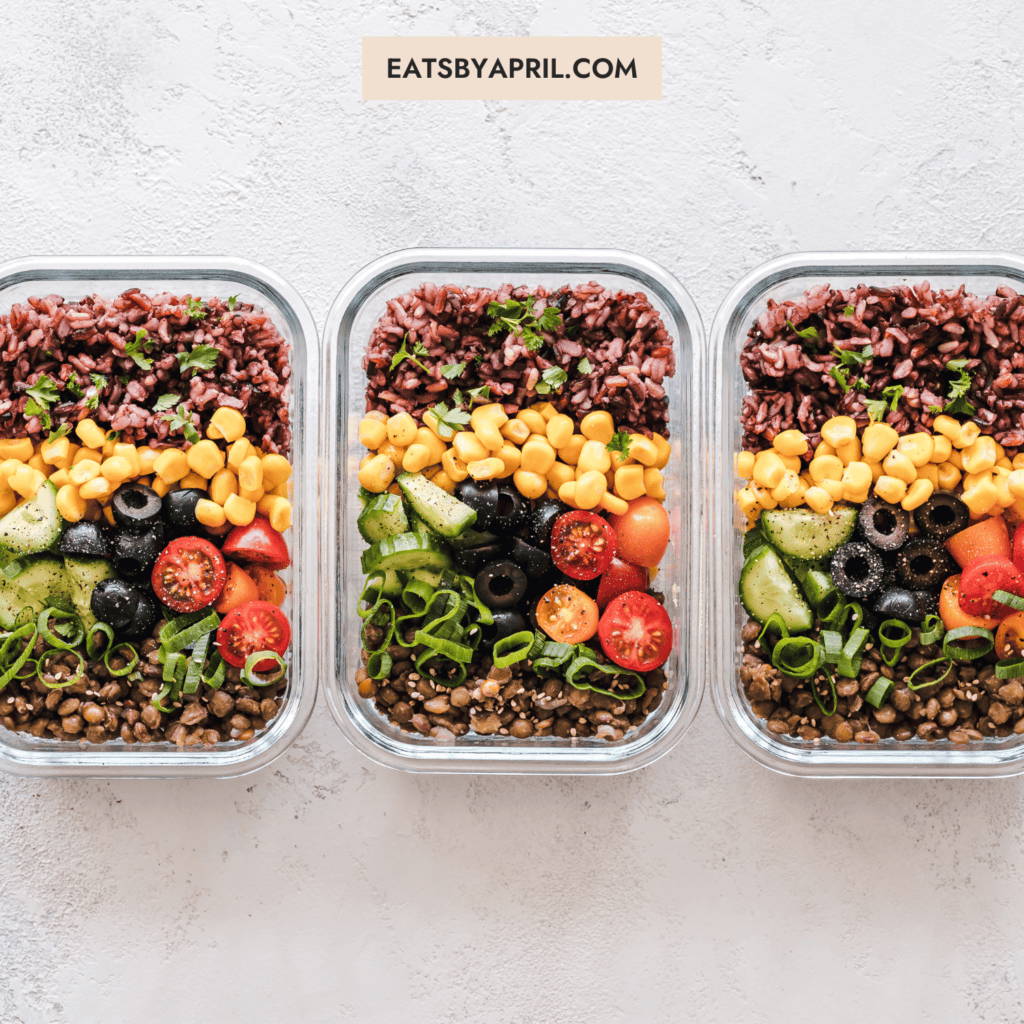
Place the salmon in meal prep containers with cooked basmati rice and lightly steamed green beans. Or make this Chickpea Quinoa Salad with Fresh Herbs - goes perfectly with the salmon.
🌊What's the difference between Atlantic and Pacific Salmon?
Generally speaking, farmed salmon is from the Atlantic Ocean and wild salmon is from the Pacific. To be sure, you'd have to ask where you buy your salmon.
Check at the store where you purchase your salmon or if you're buying frozen, check the label on the packaging.
Wherever possible, choose "wild caught" salmon. There are significant environmental concerns related to the practices of farming salmon.
More on the types of salmon here.
If you, or someone else in your family isn't a big fan of strong salmon flavours - like my hubby, try wild Coho Salmon. It has a really nice, mild salmon flavour and the fish flakes well when cooked.
🙋♀️Is salmon skin good for you?
We know that those omega 3 fatty acids that are soooo good for us are swimming around (ha!) in the salmon flesh.
But what about the skin of the salmon?
Well, the healthy omega 3 fats are actually in the skin too! The skin on salmon is generally safe to eat and provides the omega 3 fats, B vitamins and selenium - the same nutrition that the salmon flesh provides.
The only time you would consider skipping the skin is when the salmon is farmed.
Farmed salmon typically has higher than safe levels of pollutants stored in the skin. Avoid buying farmed salmon if you can. If you can't, don't eat the skin.
Otherwise, the skin on wild salmon is not only fine to eat, it's packed with nutrition so dig in!
~April
📖 Recipe
Cast Iron Skillet Salmon
Equipment
- 1 Cast iron skillet or other oven-safe pan
Ingredients
- 4 salmon filets, with the skin on
- 1-2 tablespoon butter
- Cajun seasoning
- 1 lemon
Instructions
- Pre-heat oven to 400 degrees F.
- Heat a cast iron pan over medium heat and melt 1 tablespoon of butter in the pan.
- Pat the salmon fillets dry with paper towel. Coat the top in the cajun seasoning.
- Once the butter is melted and starts to bubble, add the salmon filets, skin side down to the pan.
- Let the salmon cook for 3 minutes and don't flip it! As it cooks, spoon some of the butter overtop.
- After 3 minutes, place the whole pan into the oven to finish cooking the salmon
- Depending on the size of the fillets, it will take another 10-13 minutes to cook in the oven.
- Salmon is done when an instant read thermometer in the thickest part reads 145F or the thickest part flakes easily with a fork.
- Serve immediately on rice with lemon wedges. Squirt some lemon juice overtop the fish before eating.
Notes
Don't overcook the salmon!
It can be easy to do, especially if your fillets are small - say ~4 oz (around the size of a deck of cards.) To prevent overcooking with smaller fillets, reduce the cook time in the oven. Once you put the salmon into the pre-heated oven to finish baking, check it after 5 minutes. If it's not done (see below for how to tell), put it back in and check it after another 3-4 minutes.How to know when the salmon is done
To know when your salmon is done baking, you can either:- Check the internal temperature with a good instant read thermometer. The salmon is done when the thermometer reads 145 degrees F. This has to be in the thickest part of the fish
- Or, you can test for doneness using the "fork method": when the salmon flakes easily with a fork, in the thickest part of the salmon, it's done
MamaQ45 says
Great recipe and cooking instructions! It was delicious and cooked perfectly! Thank you!!
April Saunders says
Thank you so much for commenting @MamaQ45 and glad you liked it like we do!